Karlštejn by Train
Charles IV built a fortress to hold the imperial crown jewels and a jewel-box chapel to out-heaven heaven. The train takes 40 minutes; the chapel takes a booking.
The short version
- Local trains run Praha hlavní nádraží to Karlštejn in about 40 minutes, twice hourly, at pocket-change fares; times at cd.cz.
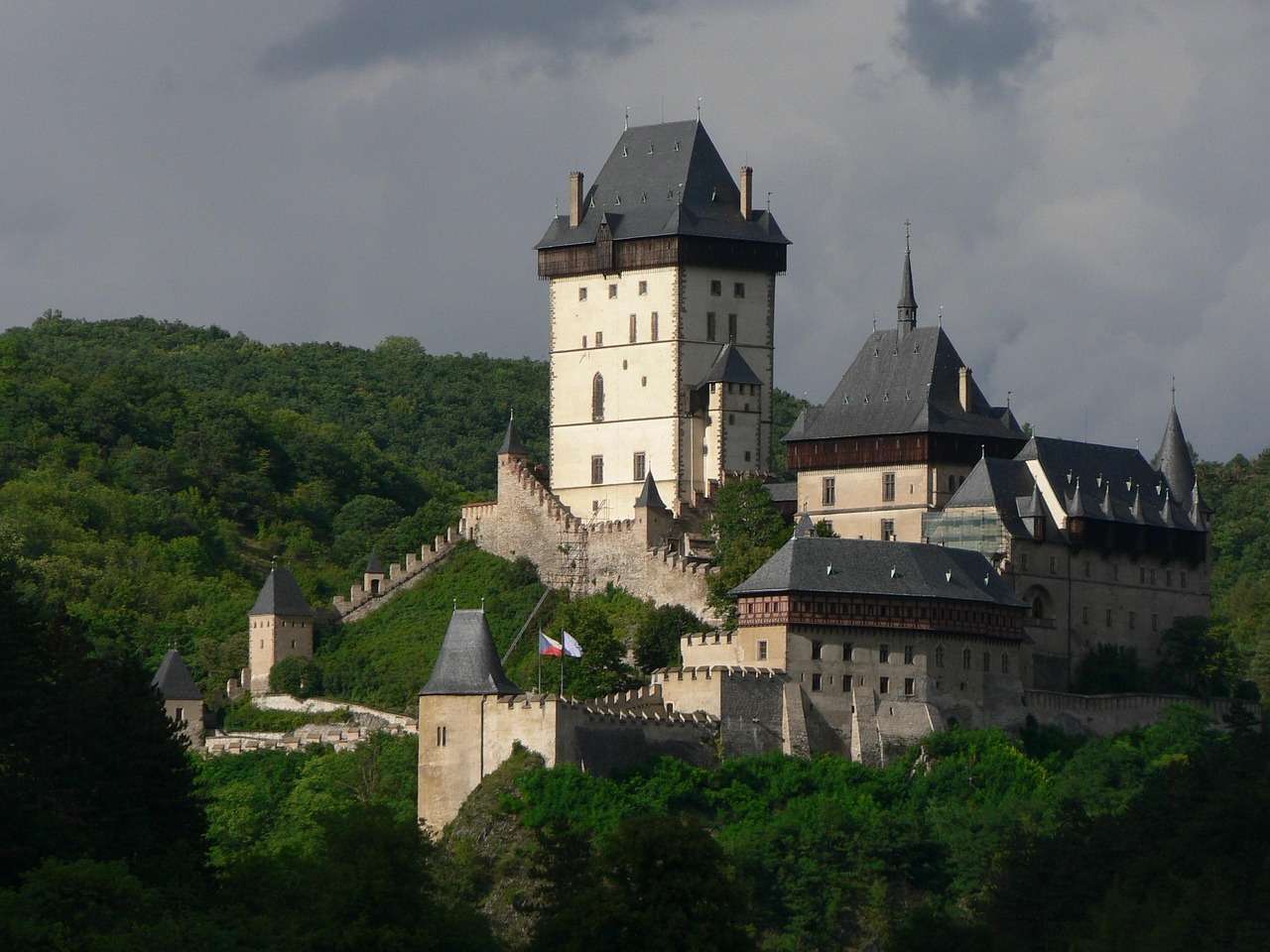
- Charles IV — Holy Roman Emperor, Prague’s builder — raised Karlštejn from 1348 as the vault for the imperial regalia and his relic collection; the silhouette above the Berounka has been the Czech castle ever since.
- The Chapel of the Holy Cross is the exceptional interior: walls set with 129 panel paintings by Master Theodoric over gilding and semi-precious stone — capacity-limited tours, booked ahead at hrad-karlstejn.cz.
- The standard tour route covers the imperial residence — Charles’s austere private world and the story of the jewels — without the chapel; both routes have their case, and the alarm has its preference.
- The village below the castle is one ascending street of trdelník smoke, crystal, and swords — a gauntlet with occasional charm and honest lemonade.
- The Berounka valley’s riverside path and the limestone country of the Bohemian Karst around it turn the trip walkable for those adding kilometers.

Getting there
The Beroun-bound locals from Prague’s main station stop at Karlštejn every half hour — buy the cheap return, validate nothing, watch the Berounka appear on the left. From the station, cross the river and climb: 25 minutes up the village street to the gate, gradient honest, gauntlet as advertised. A horse-cart and a shuttle operate in season for the climb-averse. The castle’s tour times govern everything above the village — the booked chapel slot, if you hold one, is the day’s fixed star.
The visit
Take your booked route at its hour. The chapel tour ascends through the Marian Tower’s painted corridors to the Holy Cross chapel itself — a golden vault of saints’ panels above walls inlaid with jasper and amethyst, built to house Christendom’s most political relics, and still one of medieval Europe’s most concentrated rooms. The standard route reads Charles’s residence and the regalia story with solid theater. Outside, circle the well tower and the terraces for the valley views, then descend for lunch in the village or, better, walk the riverside path toward Srbsko for the castle-over-water photographs and a pub that doesn’t sell swords. Trains home run until late.
When to go
April through October runs the full tour schedule; the chapel route’s small groups sell out summer weekends well ahead — the alarm’s booking rule tightens with the season. Winter drops to weekends-and-holidays operation with the chapel often resting — check the calendar before cold-season trips. September’s Karlštejn wine harvest festival fills the village with burčák and costumes; Czech school holidays fill the trains. A weekday morning in May, chapel slot in hand, is the connoisseur’s version.
Frequently Asked Questions
Is the chapel tour really necessary?
The standard route shows a great emperor’s castle; the chapel route shows the single room he built everything to protect. If Karlštejn is worth the trip — it is — the chapel is worth the booking discipline.
What happened to the crown jewels?
The imperial regalia moved out centuries ago (Vienna holds them); the Bohemian crown jewels live in Prague’s cathedral. Karlštejn keeps the architecture of their protection — vault-as-castle — which is the story the tours tell.
How hard is the climb?
A steady 25-minute village ascent plus tower stairs inside — ordinary fitness covers it. The seasonal shuttle and carriage handle the rest of the audience.
Can I walk in the surrounding country?
The Bohemian Karst’s marked trails link Karlštejn toward Srbsko and the Koněprusy caves — flat river paths to proper limestone hikes. The castle-plus-riverside-hour version upgrades the standard visit at zero cost.
Karlštejn or Kutná Hora with one Prague day?
Kutná Hora for a full town with two heavyweight sights; Karlštejn for one iconic castle and a valley. Kutná Hora edges it for variety; Karlštejn wins on silhouette and simplicity.